





 Language
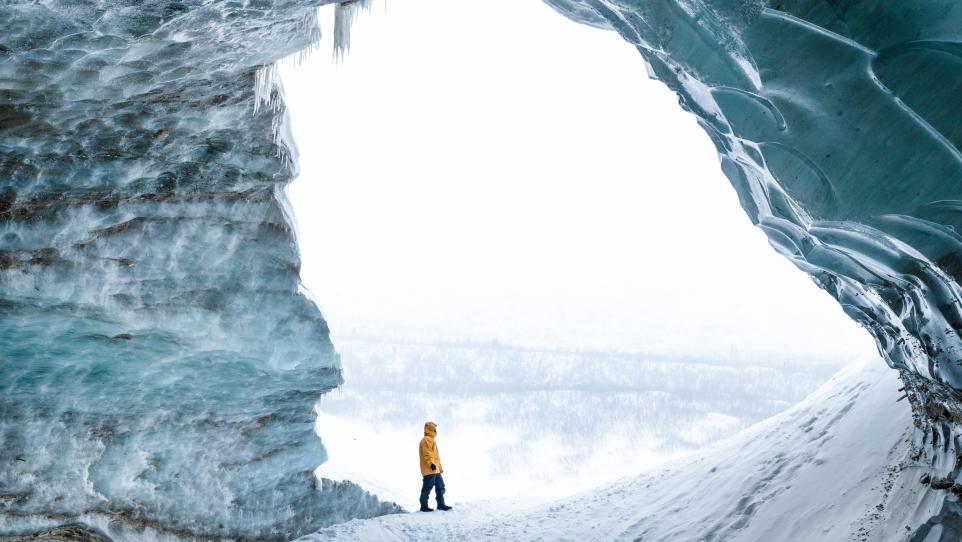
Castner Glacier is a fan favorite in Interior Alaska. Getting to the glacier is fairly straightforward, the trip is beautiful, and the glacier itself is awe-inspiring. Famous for its aqua-colored ice cave, it's an iconic natural landmark.
What to bring
Check out our What to pack for a winter trip to Fairbanks blog post for info about what to bring and how to dress in winter conditions. You’ll want to bring very warm winter gear, ice cleats, food, water, a warm face mask, and anything you might want to stay safe and comfortable in the cold.
Pro tip: Be sure to pack a headlamp or flashlight!
How to get there and where to park
Click here for GPS directions.
To get there, take the Richardson Highway from Fairbanks towards Delta Junction. Be sure to stop for gas in Delta Junction and then continue towards Fort Greely and Donnelly Dome. Look for a small parking area on the side of the highway at milepost 218. The drive can take anywhere from 2-3+ hours depending on weather and road conditions. A 2.6-mile (round trip) hike will take you to the glacier. Stay alert while hiking, as most of the trail runs directly over a frozen river. Pay close attention to your surroundings and watch for signs of broken or thinning ice to avoid falling into the river.
What you’ll see
Castner Glacier is known for its towering, glass-like cave and aqua colored ice, but there is so much more to see! Frozen crystals, silt suspended in ice, icicles, shimmering turquoise boulders, and a neighborhood of snow-covered mountains make Castner Glacier feel like stepping into a cathedral.
Safety tips
Safety is the best tool for having fun. There are a few important factors that you’ll want to pay attention to as you plan your Castner Glacier adventure: river ice, weather, and gear. Remember, safety takes the time it takes! If moving slowly increases your safety, it is always worth the extra time.
River Ice: The winter “trail” to Castner Glacier is almost entirely on top of a rushing river. What might look like a snowy field is actually a river covered in ice and snow. Be sure to stay on the trail, away from sunken pockets of snow (this might mean broken/collapsed ice), and away from wet snow (also an indicator of broken ice). Do not walk on the river ice during spring “breakup,” when the ice is cracking and melting.
Weather: Weather can change quickly in Alaska, so be sure to check the forecast multiple times before your trip to Castner Glacier. To do this, look at the weather for “Black Rapids, Alaska.” You can also check road conditions for the Richardson Highway at 511.alaska.gov. Be sure to look at Mile 362 (Fairbanks) through Mile 218 (Castner Creek).
Gear: Get prepared by checking out our What to pack for a winter trip to Fairbanks blog post to learn exactly how to dress in winter. For glacier-specific adventures, wear your warmest gear. You may also want to bring ice cleats and a face covering/mask.
Go with a guide: There are several excellent local guides that can help you have an amazing trip to Castner Glacier. Going with a guide is a great way to safely enjoy the glacier and leave the logistics to the experts.
Frequently asked questions
Is the ice cave still there?
Yes. Although the ice cave entrance has partially collapsed, the cave itself is still there. Due to increasingly warmer summers, the cave entrance is considered dynamic as it melts. Always enter with caution as there may be falling rocks and ice.
How hard is the hike?
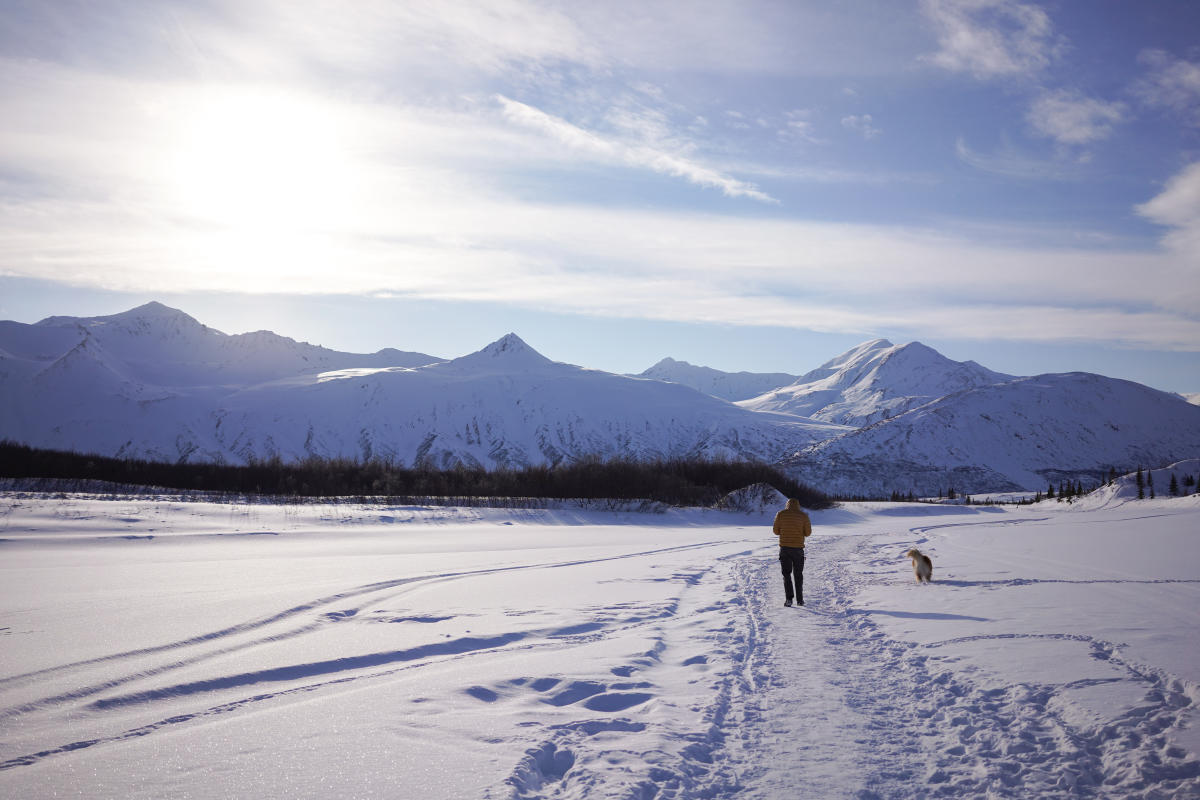
In winter, the route to the glacier follows a packed snow trail over a frozen river, which can be uneven in places. The hike is a 2.6-mile round trip. Hiking to the glacier is not recommended during extreme cold, snowstorms, or high winds, so be sure to check the weather forecast before heading out. If it has recently snowed, you may want to consider taking snowshoes for the hike.
When is the best time to visit?
October-April is generally the best time of year for visiting and entering the glacier’s ice cave. Conditions in March and April may vary year-to-year, so it’s important to research conditions before you go. Keep in mind that the cave is only safe to enter when the river is frozen, and that summer and winter offer drastically different experiences. Be sure to check out the Midnight Sun Tracker to find out how many hours of daylight you have for the hike. For avid hikers, and people who love beautiful scenery, Castner Glacier is a great year-round destination.
For more information on how to prepare for a winter trip to Fairbanks, check out our winter blog series: What is winter weather like in Fairbanks?, What to pack for a winter trip to Fairbanks, Things to do in winter: Fairbanks, AK and Your guide to winter driving in Fairbanks, Alaska.
Is there cell service?
There is no cell service at the glacier, in the ice cave or on the hike there. The drive to Castner Glacier has sporadic cell service. For the safest possible experience, be sure to let someone know when you’ll be going and be sure to check in with them when you return.
Are there restrooms?
There are no facilities or restrooms at Castner Glacier. The closest restrooms are at gas stations in Delta Junction, 50 miles away from the glacier. Make sure to stop in Delta Junction before continuing your journey!
Can I go in the summer?
Yes. You can still hike to the glacier in the summer, but you can’t enter the ice cave. In the summer, a rushing river runs through the ice cave, making it dangerous and impossible to enter. The hike is still well worth the trip, though. Huge mountains and beautiful scenery are year-round!
The summer experience
This blog focuses on the winter experience at Castner Glacier, but summer is also an excellent time to visit! The summer experience is entirely different: you’ll take a slightly different hiking route to the glacier, and the landscape looks totally different. The majesty of the summer experience lies with the sound of crackling glacier ice, the rushing river, critters, flora and fauna, and awe-inspiring mountains.

Sources: “511 Alaska.” Alaska Department of Transportation & Public Facilities, https://511.alaska.gov/., “Alaska’s Glaciers.” Alaska State Library, https://library.alaska.gov/asp/alaska_glaciers.HTML., “BLM Approves Castner Glacier Recreation Area Management Plan.” KUAC FM, 22 Nov. 2024, https://fm.kuac.org/2024-11-22/blm-approves-castner-glacier-recreation-area-management-plan., “Castner Glacier.” Wikipedia, https://en.wikipedia.org/wiki/Castner_Glacier., “Castner Glacier and Castner Ice Caves Alaska.” Ordinary Adventures, Mar. 2022, https://www.ordinary-adventures.com/2022/03/castner-glacier-and-castner-ice-caves-alaska/#hard., “Castner Glacier Information.” Steven Miley Photography, https://stevenmileyphotography.com/castner-glacier-information., “Castner Glacier Recreation Area Management Plan Final Environmental Assessment.” Bureau of Land Management, https://eplanning.blm.gov/public_projects/2030733/200605521/20123366/251023346/Castner%20Glacier%20RAMP%20Final%20EA_508.pdf., “Castner Glacier Trail.” Bureau of Land Management, https://www.blm.gov/visit/castner-glacier-trail., “Experience Builder Map.” ArcGIS, https://experience.arcgis.com/experience/46971856c83e475887a6a6f085ebf5a8/#data_s=id%3Awidget_82_output_config_default_geocode_utility_1_0%3A0., Joly, Kyle. Outside in the Interior: An Adventure Guide for Central Alaska. 2nd ed., University of Alaska Press, 2007., “The Castner Glacier Ice Cave Is Collapsing and Gushing Meltwater.” Alaska Public Media, 14 July 2022, https://alaskapublic.org/news/2022-07-14/the-castner-glacier-ice-cave-is-collapsing-and-gushing-meltwater., “Winter Recreation Map: White Mountains National Recreation Area and Steese.” Bureau of Land Management Alaska, https://www.blm.gov/alaska/public-room/map/winter-recreation-white-mountains-national-recreation-area-and-steese.
